Safety belt straps
Technical woven components evaluated together with the final system specification, hardware, and test plan.
Column, tape, binding and fastening solutions used in automotive and transportation applications.
Narrow woven products in the automotive and transportation sector can be used in different applications as connection, fastening, conveying and auxiliary textile components. In areas where a rigid structure is required, woven webbingtape and other narrow woven structures are evaluated in more flexible or auxiliary components.
Width, hardware, and stitching compatibility are evaluated together in woven components intended for lashing and tensioning. The load-bearing capacity and safety suitability of the final product must be verified as a system by the application owner within the scope of relevant standards.
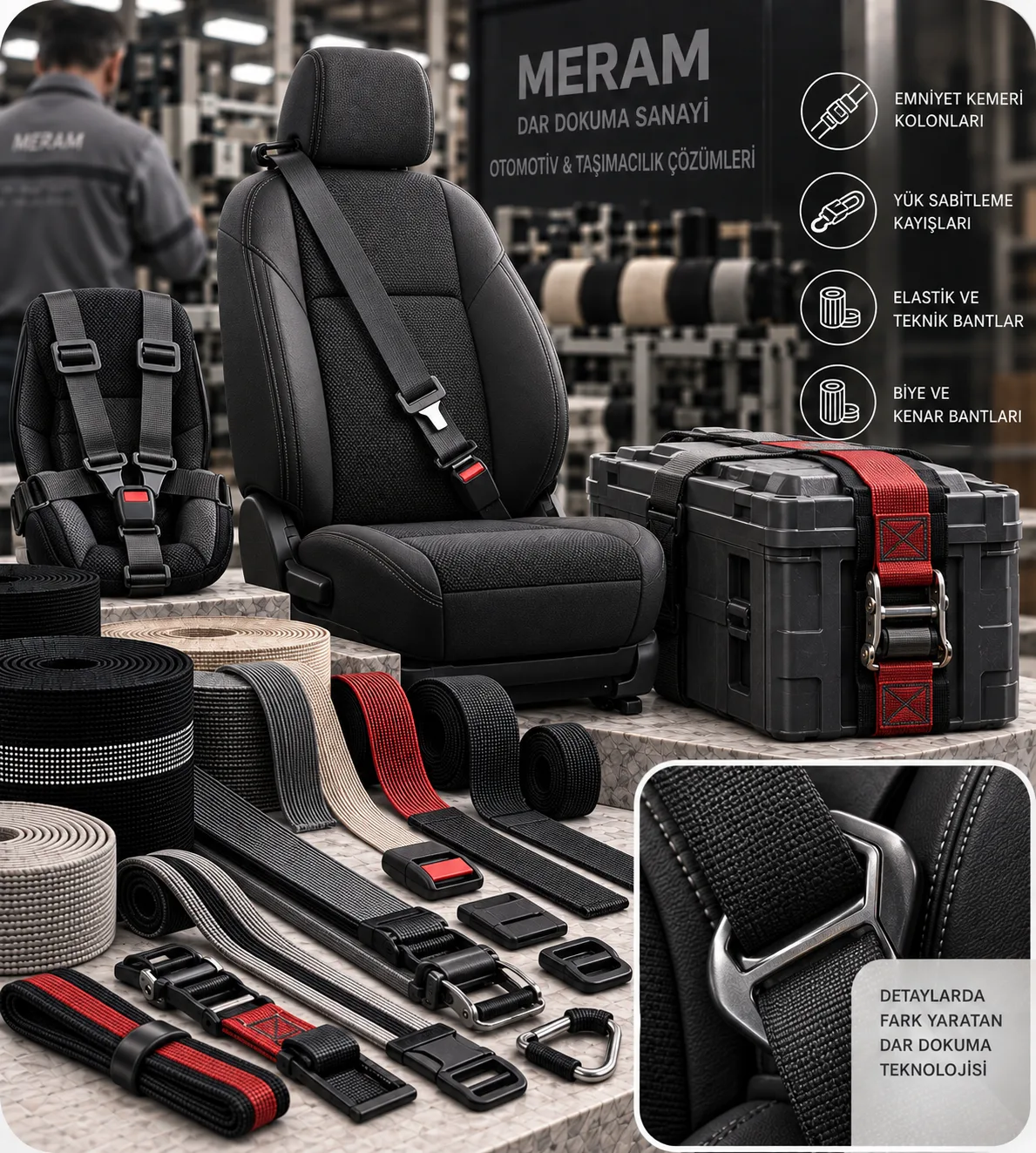
Different product groups can be evaluated specifically for the project according to the function, size, and design features required by the area of use.
Technical woven components evaluated together with the final system specification, hardware, and test plan.
Woven webbing in different widths compatible with buckle, tensioning device, and stitching structure.
Rigid structures developed according to the task of regulation and securing in transportation processes.
Woven components to be used only within the scope of relevant engineering, equipment and system tests.
Elastic narrow weaves providing controlled stretch at vehicle interior organization points.
Edge finishing, joining and decorative detail solutions in interior trim and textile parts.
In the selection of narrow weave products to be used in Automotive & Transportation applications, dimensions, weave structure, flexibility, color and usage method are evaluated together.
The appropriate width and weave structure are determined according to the product's connection, carrying, edge finishing or elasticity needs.
Different color, pattern and surface options can be evaluated according to the visual language of the product and the application area.
Strip, webbing, elastic, bias or cord alternatives are selected according to the purpose of use.
The narrow weave solution is shaped according to functions such as hanging, fixing, gathering, carrying or edge closing.
Narrow woven products are evaluated to ensure compatibility with the final product's production process and assembly method.
Suitable product structure, color, and size alternatives can be evaluated together in line with project information.
Yarn, weave density and dimensional stabilityaffect the behavior of the webbing at the point of use and its operation with the equipment. The technical tape structure is evaluated according to the intended task and customer specification.
Buckle, fitting, stitching and surface compatibilitycannot be considered separately from the woven tape. In fastening, tensioning or in-vehicle applications, the entire fastening system must be planned together.
Testing and standard verificationis performed by the manufacturer or application owner of the final system. Load capacity and safety performance cannot be declared based solely on the narrow woven component.
Sample images from Meram Narrow Weaving's product groups for the automotive & transportation sector have been compiled to closely examine different narrow weave structures and usage diversity.
Narrow weave components in automotive and transportation products can be used in different tasks such as interior trim, arrangement, connection, auxiliary fastening and textile accessories. Automotive column When selecting a woven tape, the position of the part inside the vehicle, the connection method, the visibility level and the usage conditions to which it will be exposed should be evaluated together.
For tougher flat tape and connection needs, woven webbingfor lighter auxiliary textile parts, woven tapefor applications requiring controlled stretch, elastic narrow weave options can be compared.
In the automotive supply chain, part definition should not be limited to visual samples only. Target dimensions, material expectations, color, connection type, and customer-requested test/performance criteria should be clarified at the beginning of the project. This allows the textile component to be produced to be tailored to the actual requirements of the relevant application.
Meram Narrow Weaving evaluates the narrow weave product structure in automotive and transportation projects based on the customer's technical specifications or reference samples; unverified performance or standard claims are not added to the product information.
Basic questions that facilitate decision-making about product selection, production structure and areas of use.
Depending on the application, webbing, woven tape, strips, and various auxiliary textile components can be used.
Woven components can be produced; however, the capacity, equipment, stitching, testing, and standard compliance of the final bonding product must be verified as a system.
Width, yarn, weave density, friction conditions, compatibility with bonding equipment, and end-use conditions should be evaluated together.
Different colors and weave appearances can be evaluated according to project requirements.
Webbing is generally designed to be more robust and load-bearing; tape, on the other hand, has a wider range of functions and surface characteristics.
No. The final capacity depends on the weave, stitching, fasteners, geometry, and tested system performance as a whole.
The weaving structure can be evaluated based on the sample and technical usage information; final application standards should also be considered.
Different widths can be evaluated according to production capability and project requirements.
Automotive & Transportation Main product and search terms related to narrow woven products for the sector.
Share your product group, size, color, pattern and area of use information; let's evaluate the options suitable for your needs together.