Edge closing and reinforcement
Binding woven products can be used to close cut textile edges and make joint areas more orderly.
Narrow woven binding solutions for edge closing, reinforcement and decorative finishing applications.
binding tapeis a narrow woven product used to close cut edges, reinforce joints and achieve a cleaner finish on fabric, leather, artificial leather and technical textile surfaces. Meram Narrow Weaving produces narrow woven binding solutions in different widths, yarns, colors, surfaces and weaving characteristics according to the application area. narrow woven binding solutions.
The correct choice of binding does not depend solely on color. The edge's fold structure, sewing technique, product thickness, desired flexibility, abrasion resistance, and visual finish should be evaluated together. Therefore, the correct structure is determined according to the usage scenario, along with alternatives such as woven tape, woven elastic and woven webbing .
Textile binding serves both functional and decorative purposes in various fields, from clothing and apparel to home textiles, shoes and bags, furniture, and industrial textiles. The aim in production is to create a balanced structure that reduces edge fraying, organizes the seam line, and gives the final product a more finished look.
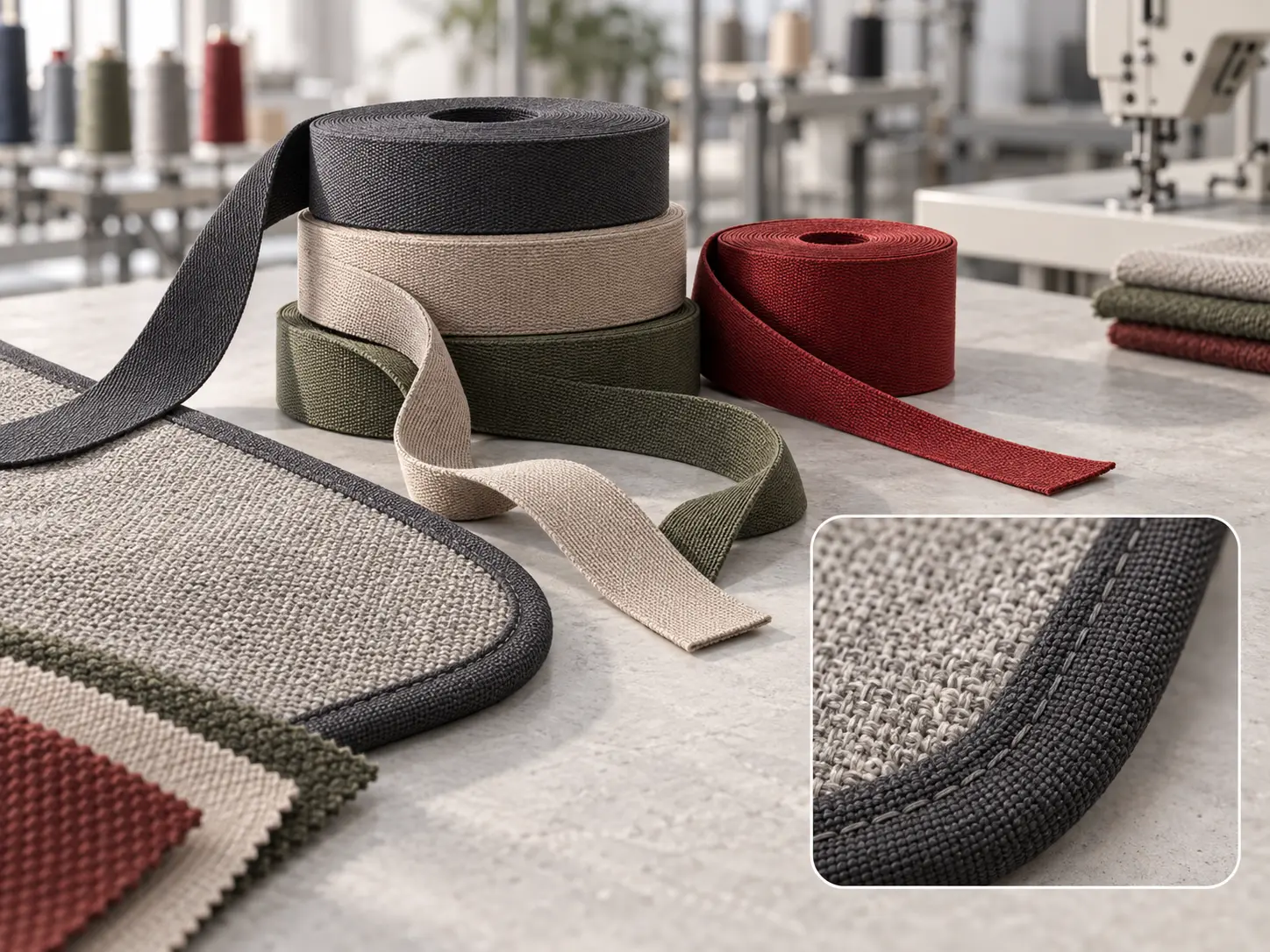
Binding woven products can be used to close cut textile edges and make joint areas more orderly.
Visual integrity can be achieved with bias binding in different colors and patterns according to the product design.
Can be used in different product groups from clothing to bags, home textiles to furniture. narrow woven binding can be used.
Narrow woven bias bindings are used in different sectors to finish the edges of textile products, reinforce joints and create decorative details.
Can be used to create more regular and durable edge finishes in collars, sleeves, hems and joint areas.
Provides decorative and functional use on the edges of products such as pillows, tablecloths, curtains, bedspreads, and similar items.
Binding can be preferred at seams and joints on the edges of shoes and bags.
Can be used in the edge finishing of upholstery products and various textile coverings.
Can be considered as a detail that strengthens the edges of work clothes and protective textile products.
Can be used as a design element in various handicraft, accessory, and decorative textile applications.
Fold and Edge GeometryDetermines how smoothly the bias tape follows the surface during application. Width and weave elasticity should be planned according to the application for narrow turns, thick or multi-layered edges.
Material and Stitch CompatibilityImportant for achieving a clean joint on fabric, leather, artificial leather or technical textile surfaces. Yarn structure, thickness and edge character are evaluated together with the stitching method.
Color, Surface and Sample ControlSupports the visual integrity of the bias tape with the main material and maintaining the same appearance in mass production. Color and feel comparison can be made from a reference fabric.
Images of Meram Narrow Weaving's binding tape product group have been compiled so that you can closely examine the product structure, color and weaving alternatives.
binding tapeis not just an auxiliary material that covers the edge of a product; it is a functional narrow weaving component that contributes to the neat appearance of the seam line, the protection of the cut surface, the gathering of the joint area and the completion of the design. Therefore, when choosing textile bias, not only the color and width but also the thickness of the surface to which it will be applied, the fold geometry, the sewing method and the friction it will encounter during use should be considered.
Even if the bias used in clothing and garments narrow woven binding and the bias used in shoes, bags or upholstery applications aim for the same visual effect, they may have different structural expectations. While a structure that allows for easy turning on a thin and curved edge is sought, a structure that accentuates the edge and supports the form on a firmer surface may be preferred. This distinction makes bias tape not just an accessory, but part of the product development decision.
With Binding Tape woven tape are related product families; however, the intended use differs. While ribbon can be used in numerous connecting, decorative, and auxiliary textile roles, bias tape stands out especially for edge finishing, edge reinforcement, and creating a clean transition between surfaces. In applications where flexibility is required, woven elastic solutions should also be evaluated.
At Meram Narrow Weaving, when evaluating the demand for bias tape, the area of use, target width, color, surface character, yarn preference, and sewing/application method are considered together. Evaluation based on sample or application information helps in making a more accurate choice that considers not only the appearance but also the repeatability in production and the consistency in the final product.
Production width: Meram Narrow Weaving can produce narrow woven fabrics in different widths from 0.5 cm to 50 cm, depending on the project and product structure.
Basic questions that facilitate decision-making about product selection, production structure and areas of use.
Bias binding is a narrow woven strip used to cover, reinforce, or decoratively complete the edges of textiles and similar surfaces.
It can be used in clothing, garments, home textiles, shoes, bags, furniture, upholstery, and various technical textile applications.
woven tape refers to a much wider range of uses. Bias binding, on the other hand, focuses specifically on the structure and usage method chosen for edge finishing and edge reinforcement.
Width, color, yarn type, surface texture, density, and design details can be evaluated according to the intended use.
Yes. Bias bindings for edge closing, seam areas, and decorative finishing can be designed according to shoe and bag applications.
It is preferred to organize seam and seam lines, protect edges, and give the product a more finished look.
Edge geometry, stitching method, material thickness, flexibility requirements, friction conditions, and desired visual finish should be evaluated together.
Production can be planned by evaluating suitable weaving structure and color alternatives based on project information, reference sample, or technical expectations.
Binding Tape Main product and search terms related to the product group.
Please share your measurements, color, pattern, yarn type, and intended use; let's evaluate the options that suit your needs together.