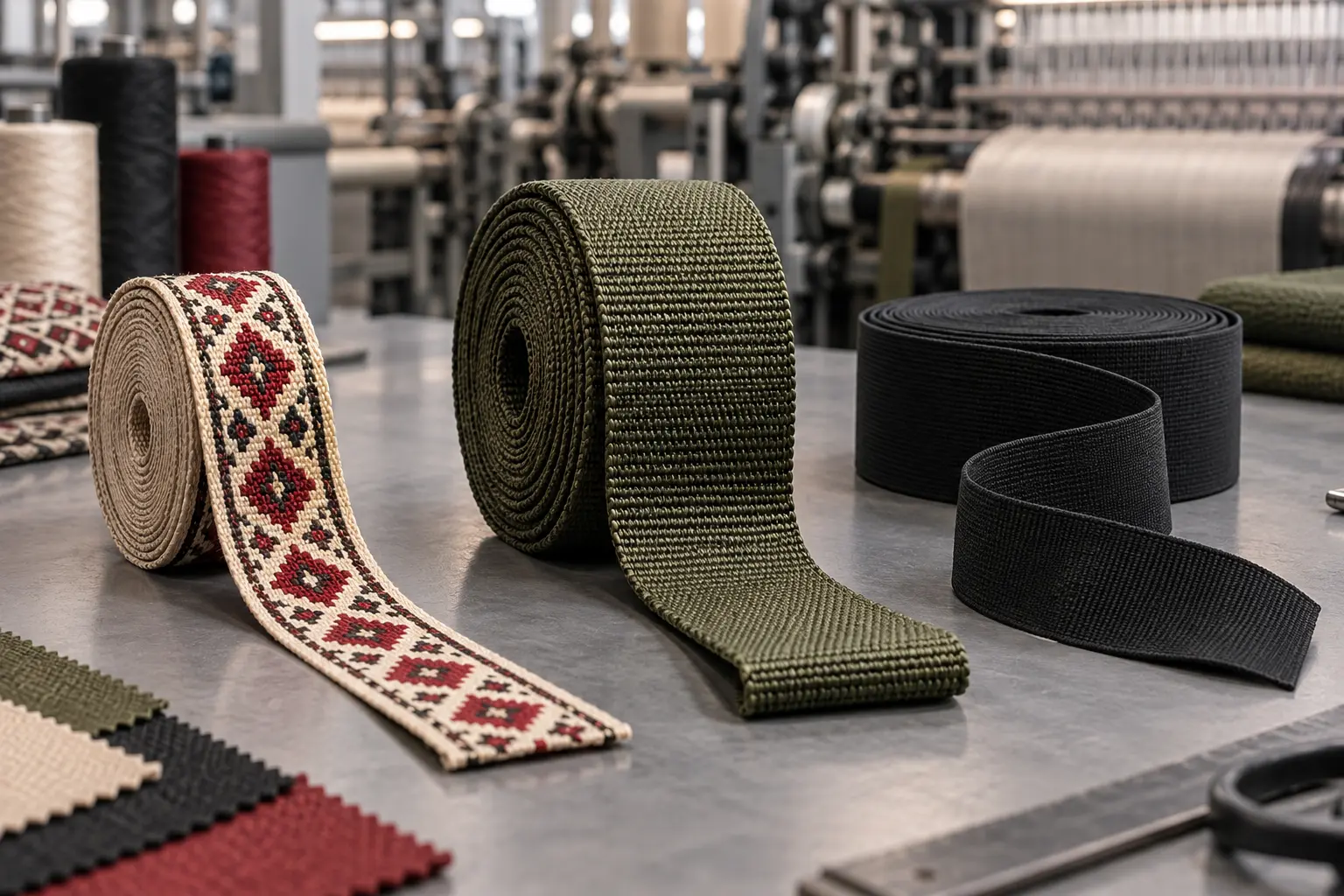
woven tape: surface variety and flexible application area
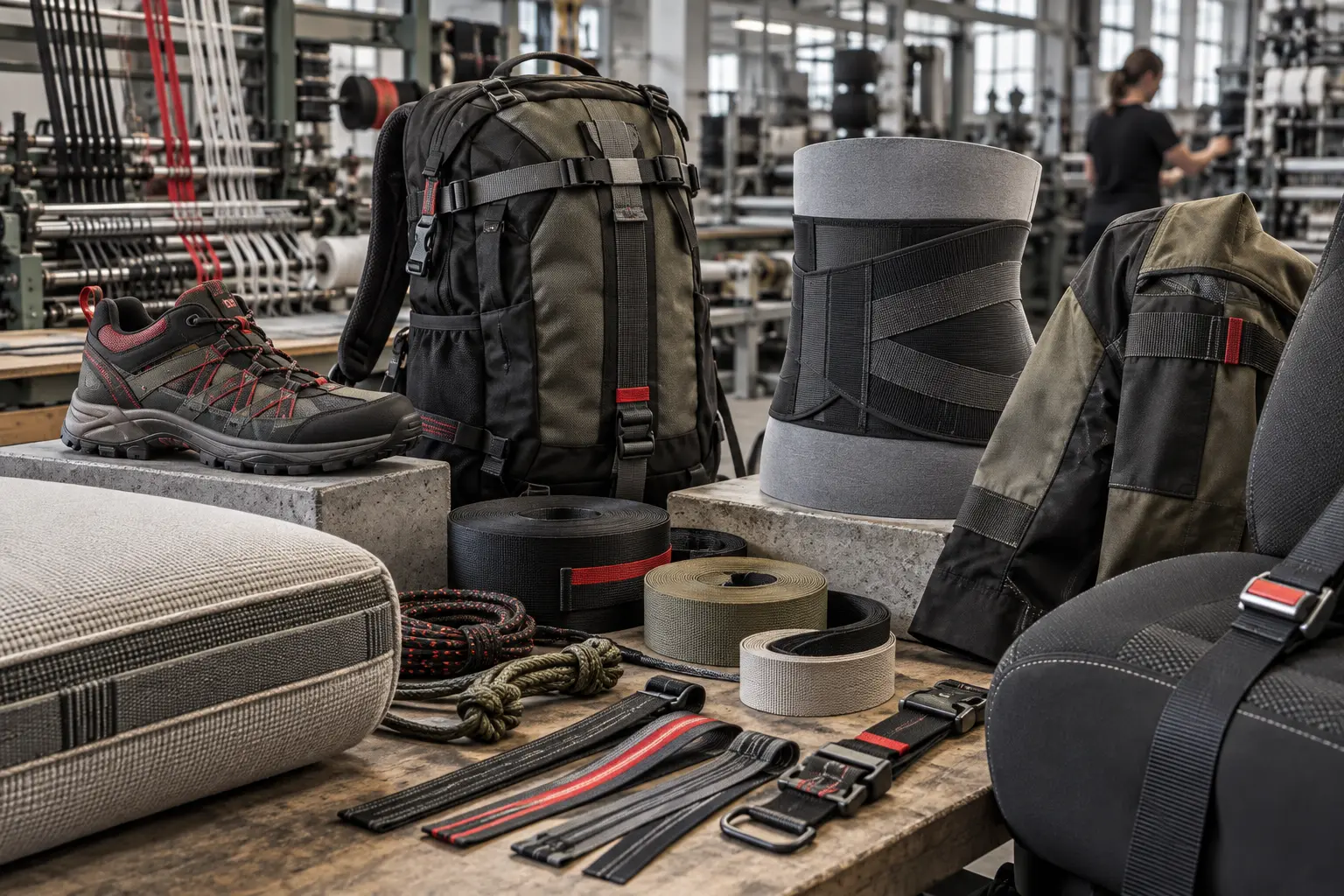
woven tapestands out among narrow woven products with its wide range of patterns, colors, yarns and surface options. It can be used as a decorative detail, edge application, auxiliary connection or complementary piece. Different weaving characteristics can be developed, from fine and soft structures to more robust options.
When selecting ribbon, not only the pattern but also the edge smoothness, stitching behavior, need for curling, and the integrity it creates with the main fabric should be evaluated. While color and texture are prominent on visible surfaces, thickness and ease of application may be more decisive in parts that remain within the product.
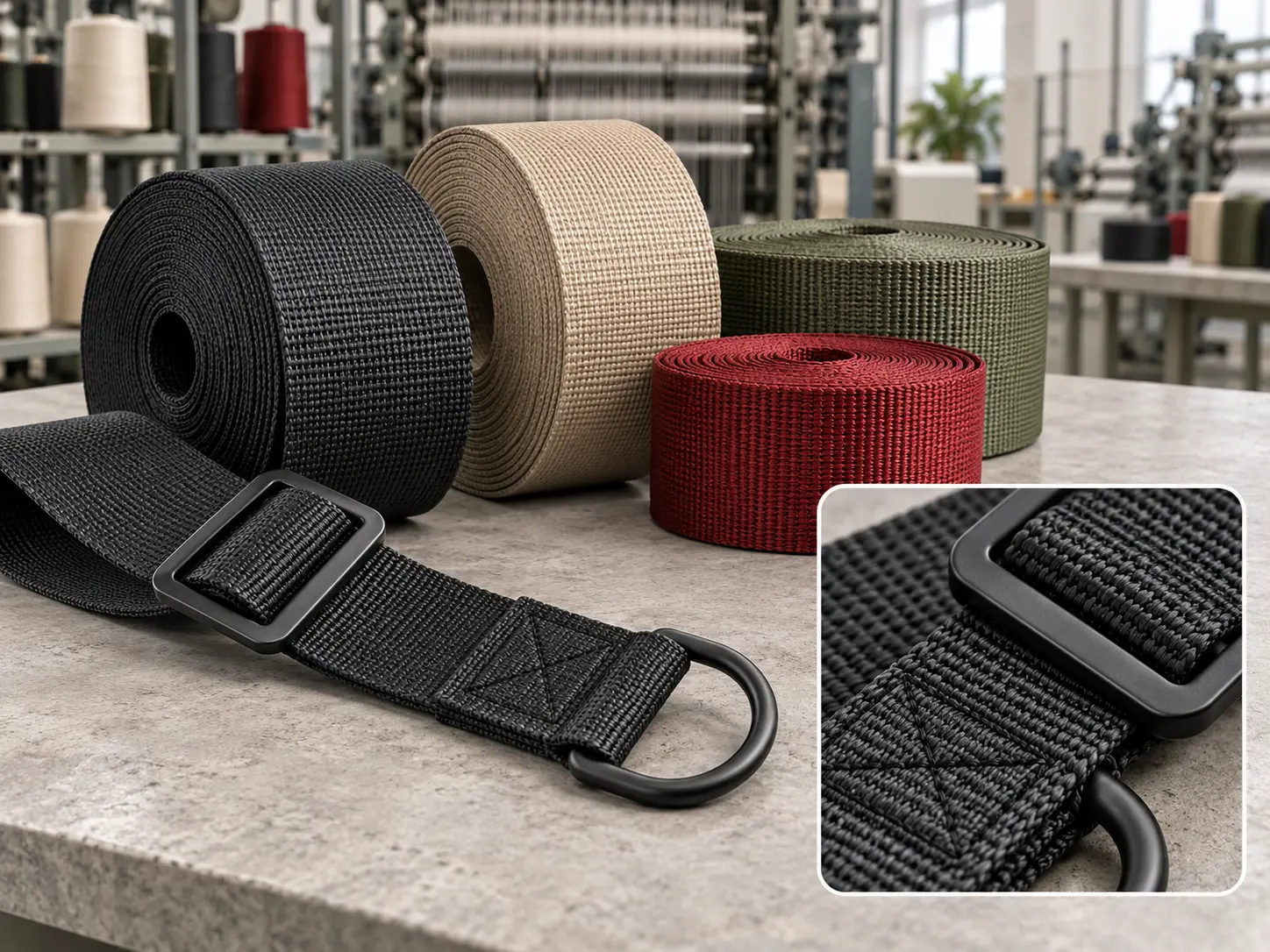
woven webbing: robust structure, connection and load-bearing focused use.
Webbing generally offers a fuller and more robust structure. It is evaluated in areas where form and structural behavior are important, such as bag straps, belts, connecting parts, furniture supports, and equipment applications. Width, yarn, weaving density, and connecting accessories should be selected together.
The term "webbing" alone does not mean a specific load-bearing capacity. Actual performance depends on the product structure, stitching, buckle, connection type, and the entire final system. Therefore, the required strength levels should be defined in the project specifications, and the relevant tests should be verified on the completed product.
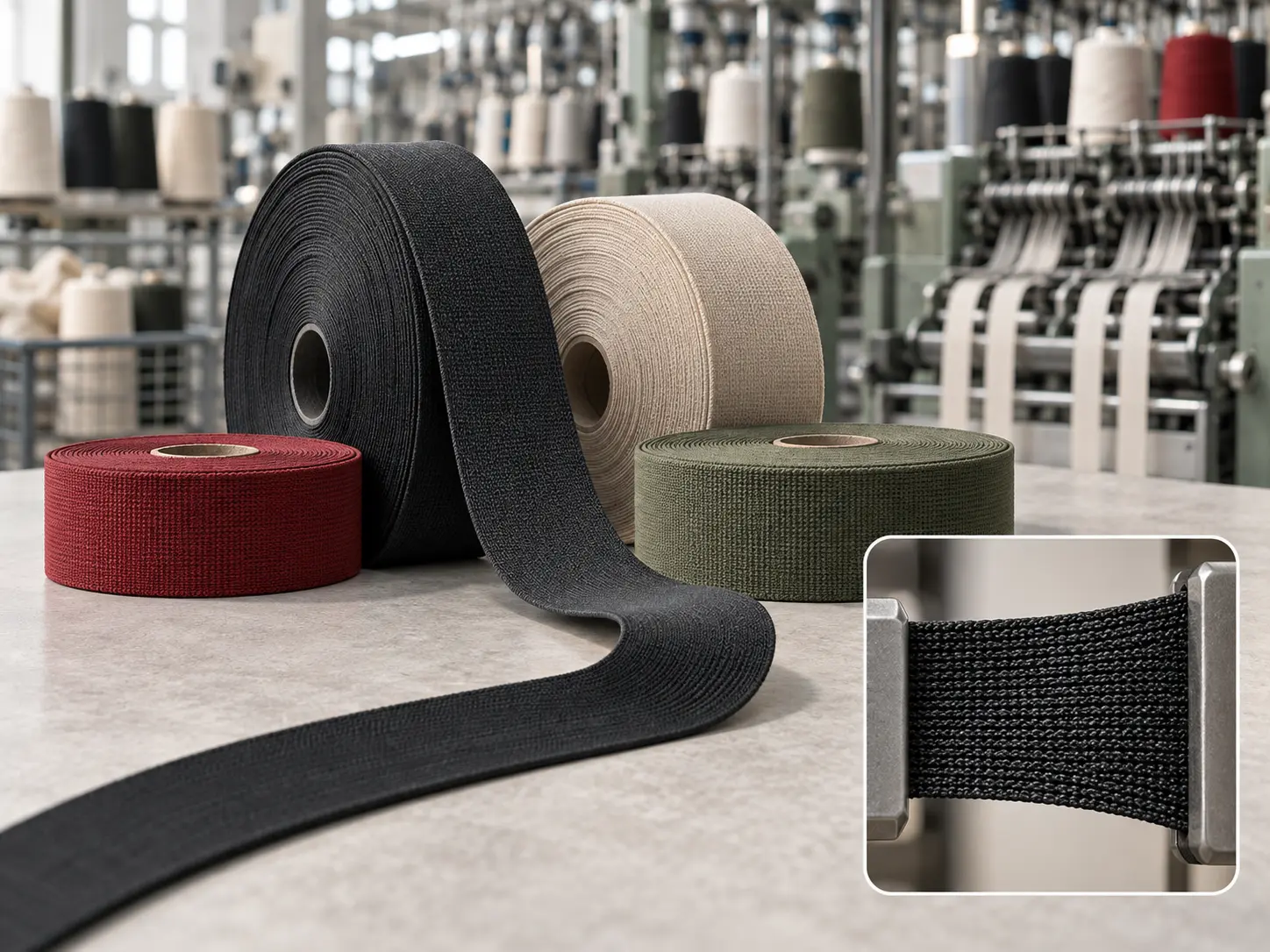
woven elastic: controlled elongation and recovery
woven elasticThanks to its elastic components, it provides elongation in a specific direction and recovery behavior after use. It is used in clothing, footwear, medical textiles, furniture and various technical applications where body or form conformity is desired.
The right rubber is not just a product that stretches easily. Initial stiffness, target elongation, recovery after repeated use, width, surface feel and how it joins with the seam are considered together. Elongation value, service life and suitability expectations must be verified under final product conditions.
Let's evaluate your narrow weaving needs together.
Share your application area, dimensions, color, function, and sample information, if any. Let's clarify the appropriate product structure together.
CONTACT US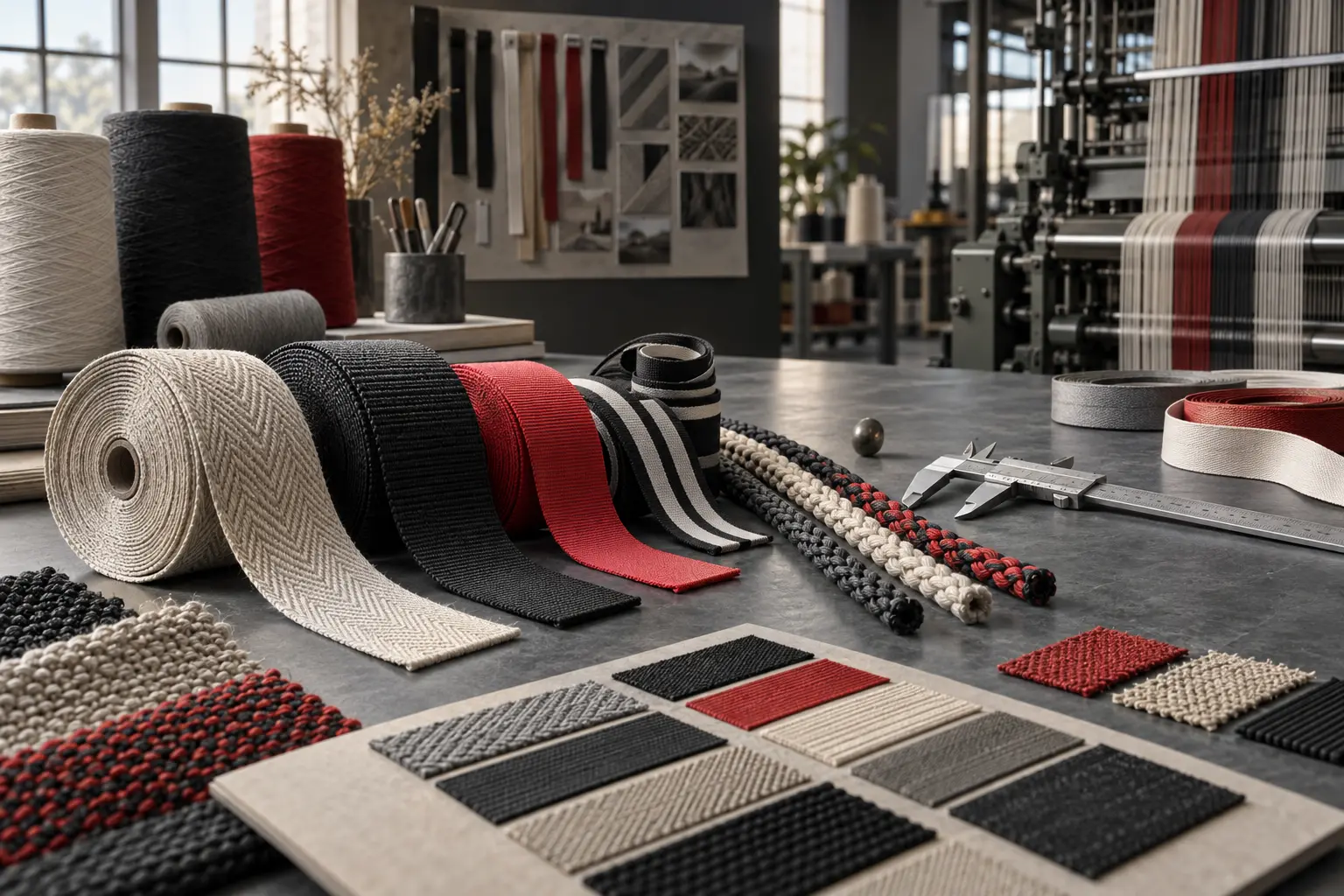 MERAM JOURNAL
 MERAM JOURNAL
 MERAM JOURNAL