Describe the final product and its point of use
The correct narrow weave product is determined not by a general definition such as "we need tape," but by explaining where, how, and with which components the part will work in the final product. Will it create a visible surface, transfer load, stretch, cover an edge, or pass through a buckle? This information is fundamental to reaching the correct product family.
Application photograph, technical drawing, or existing sample; show the details of the fold, seam, and connection in addition to the dimensions. Selecting based solely on width is incomplete without knowing the thickness of the contact fabric, the dimensions of the metal or plastic accessory, and the contact situation of the part with the user.

Separate the expectations that vary by sector
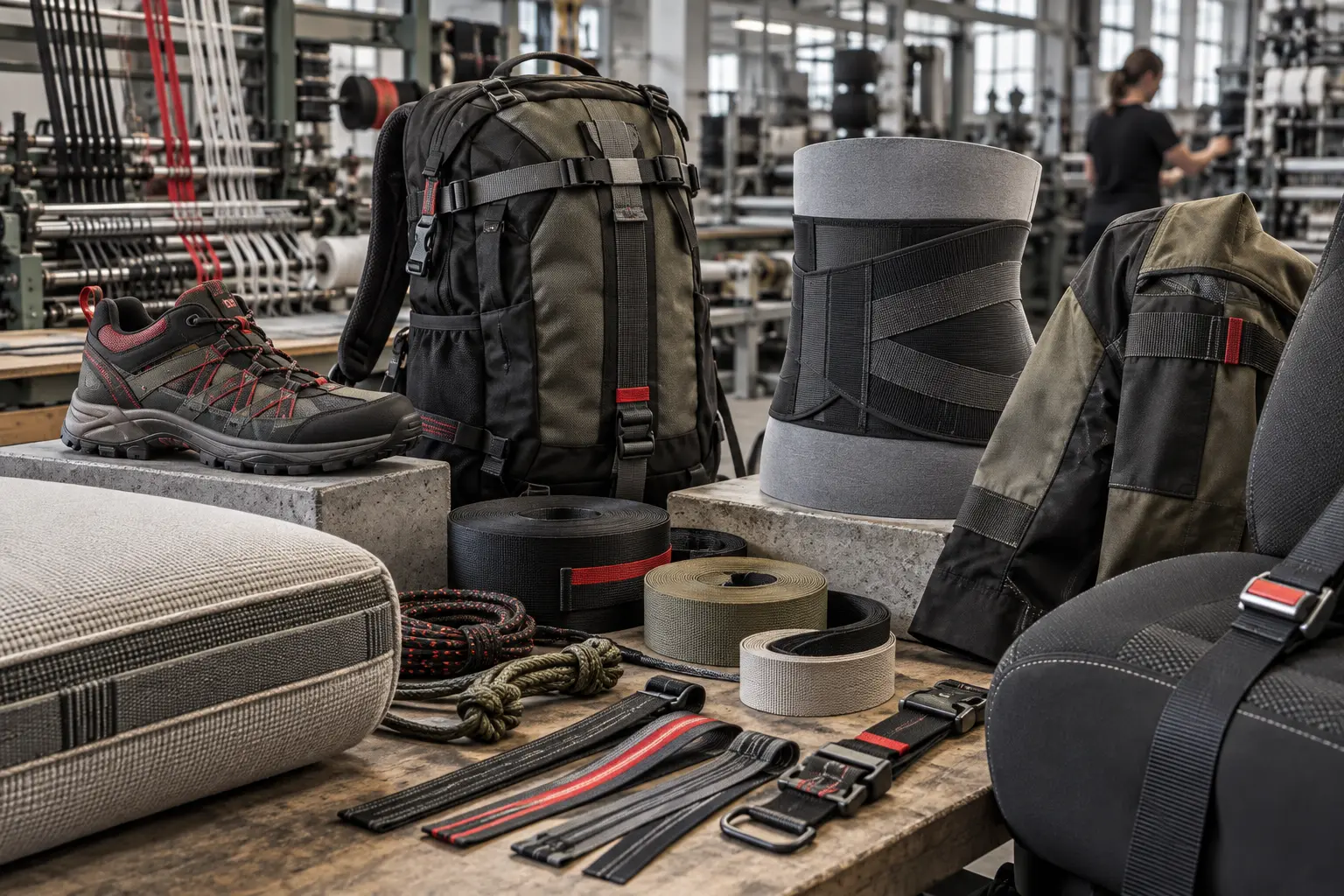
Footwear and slippers In applications, fastening, flexibility, and contact with the foot; In bags and leather goods Strap, connection and accessory compatibility are prominent. In clothing and apparel Skin contact, curve and softness; In home textiles and furniture Edge finishing, decoration and support function can be decisive.
Medical-orthopedic, Automotive-transportation, Occupational safety and Field equipment In these applications, project specifications, traceability and final system tests may impose more specific requirements. Even if the product family remains the same, the structure, material and verification method vary according to the sector.
Verify the technical specification with a sample
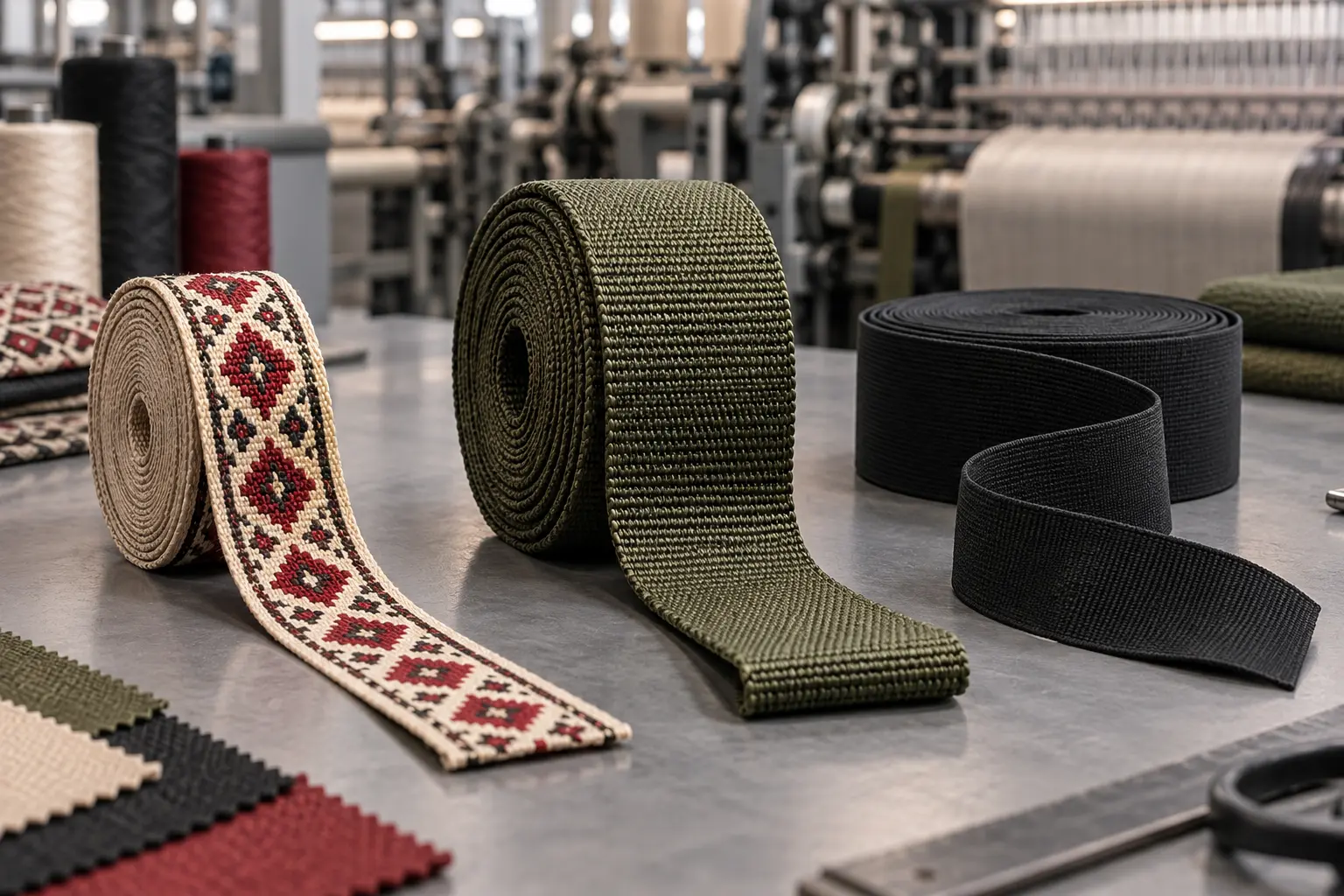
After the requirement description, width and tolerance, color, yarn, weave density, thickness, surface, edge, and stretch expectation (if any) are converted into a technical record. Information on stitching and fastening accessories is also part of this record. Thus, the criteria by which the sample will be evaluated are determined from the outset.
The sample should be checked by combining it with the actual fabric and accessories. Slippage in the stitching, buckle passage, crease, surface contact, color uniformity, and movement behavior are observed on the application. After approval, linking the accepted characteristics to the production reference supports consistency in mass orders.
Let's evaluate your narrow weaving needs together.
Share your application area, dimensions, color, function, and sample information, if any. Let's clarify the appropriate product structure together.
CONTACT US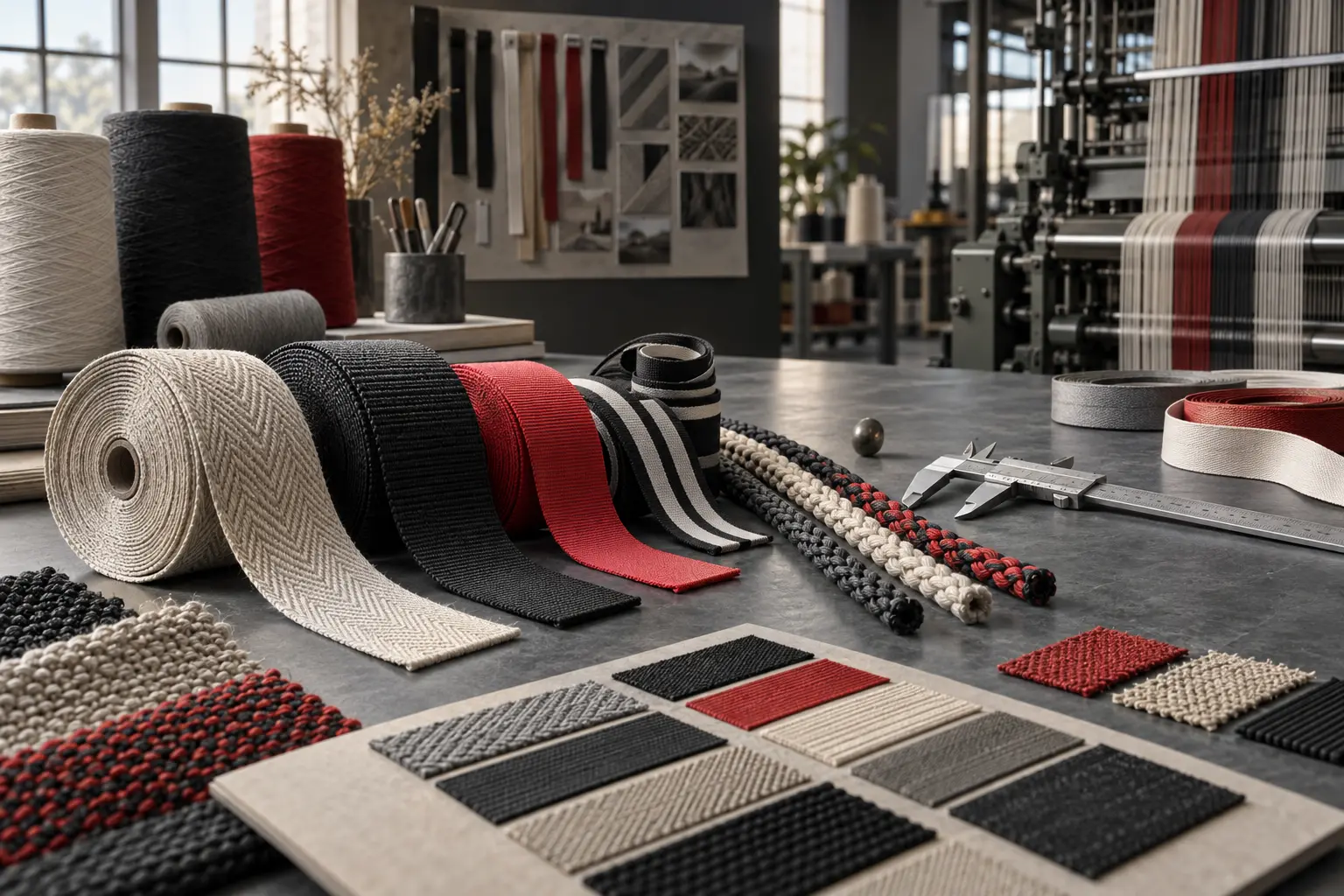 MERAM JOURNAL
 MERAM JOURNAL
 MERAM JOURNAL