Begin the selection by defining the function of the product
In narrow woven products, the correct structure is determined by defining what function the part will undertake in the final product How to Choose the Right Narrow Woven Structure — technical guidance Technical guidance from Meram Narrow Weaving on product structure, application requirements and project-specific development. ribbon, webbing, elastic, bias binding and cord / shoelace establishes the first distinction between the product families.
Two fabrics of the same width may exhibit different handling, thickness, and curling behavior when the yarn type and density are changed. Therefore, whether the product is visible, whether it comes into contact with the skin, what fabric or accessory it is combined with, and the movement it will be subjected to during use must also be described. In this way, a structure can be developed that not only looks appropriate in size but also adapts to the working method of the application.
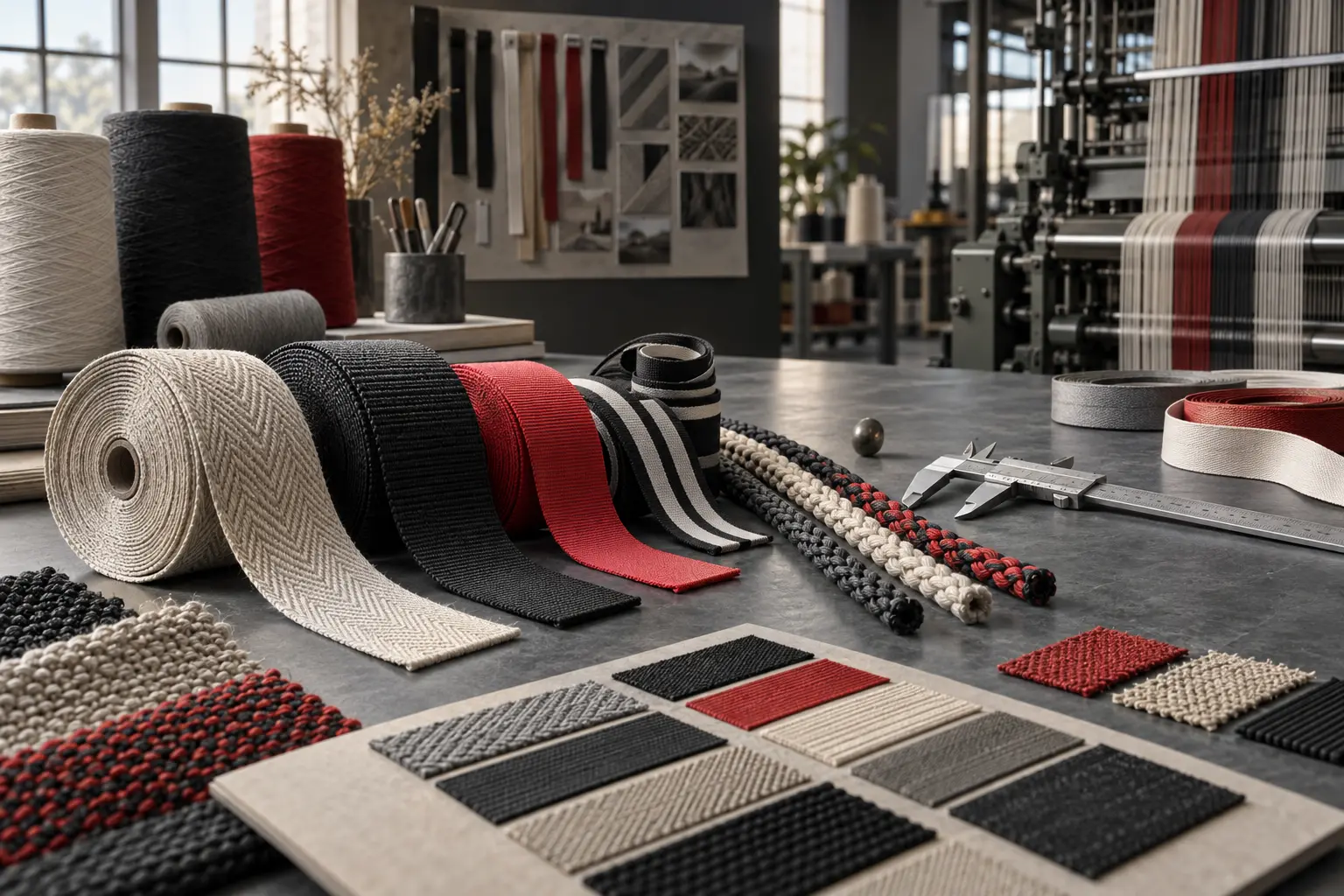
Six technical variables that determine the structure decision
When preparing the technical description width and tolerance, yarn type, weave density, thickness, elasticity and recovery behavior, surface and edge structure are evaluated together. The type of seam, the passage size of the buckle or fastener, and the areas where the product will be folded are also part of the decision. For example, a rigid webbing may provide an advantage in conveying and fastening applications, while the same structure may be unnecessarily rigid on a soft contact surface.
Color is not merely a visual preference; it must be considered in conjunction with the main fabric, plastic, or metal accessories. The behavior of the edges at the seam, the friction character of the surface, and the effect of thickness on the assembly point should be observed before mass production. Since the size chart alone is insufficient, an existing sample or application photograph illustrating the intended feel will expedite the technical discussion.
Evaluate the sample on the final product
The sample from the loom is only an initial representation of the actual usage conditions. Whether the fabric puckers under the seam, whether it passes through the buckle easily, whether it leaves marks in the fold area, and the color match with the main material should be checked on the final product. on the finished product In flexible fabrics, post-use recovery behavior is as important as the target elongation.
The width, color, yarn, weave, and surface expectations of the approved sample must be converted into a clear production definition. This record ensures that the purchasing, sampling, and mass production stages proceed with the same reference. In applications with specific performance or regulatory expectations, the necessary tests must be determined by the project owner, taking into account the final product and usage scenario.
Let's evaluate your narrow weaving needs together.
Share your application area, dimensions, color, function, and sample information, if any. Let's clarify the appropriate product structure together.
CONTACT US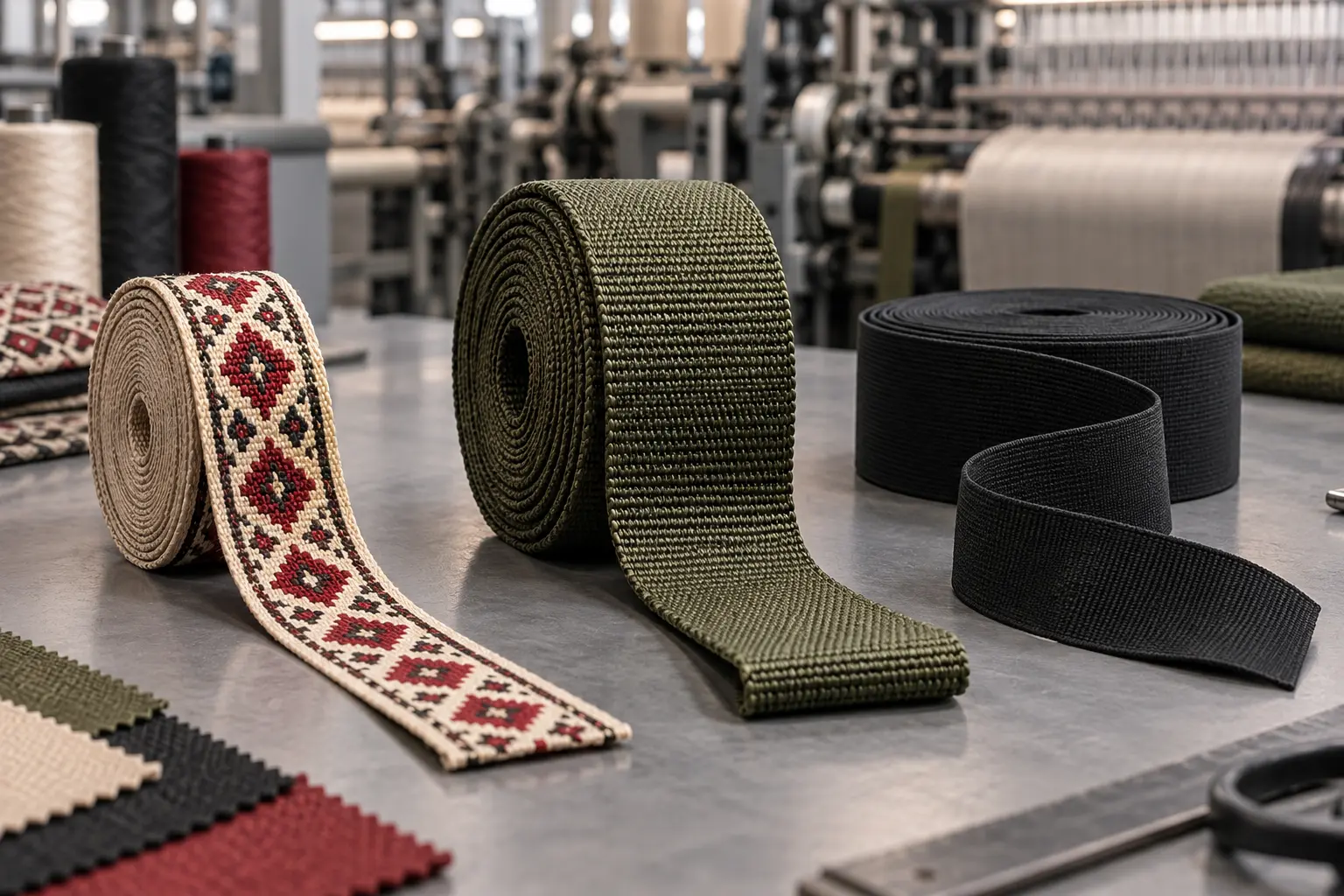 MERAM JOURNAL
 MERAM JOURNAL
 MERAM JOURNAL